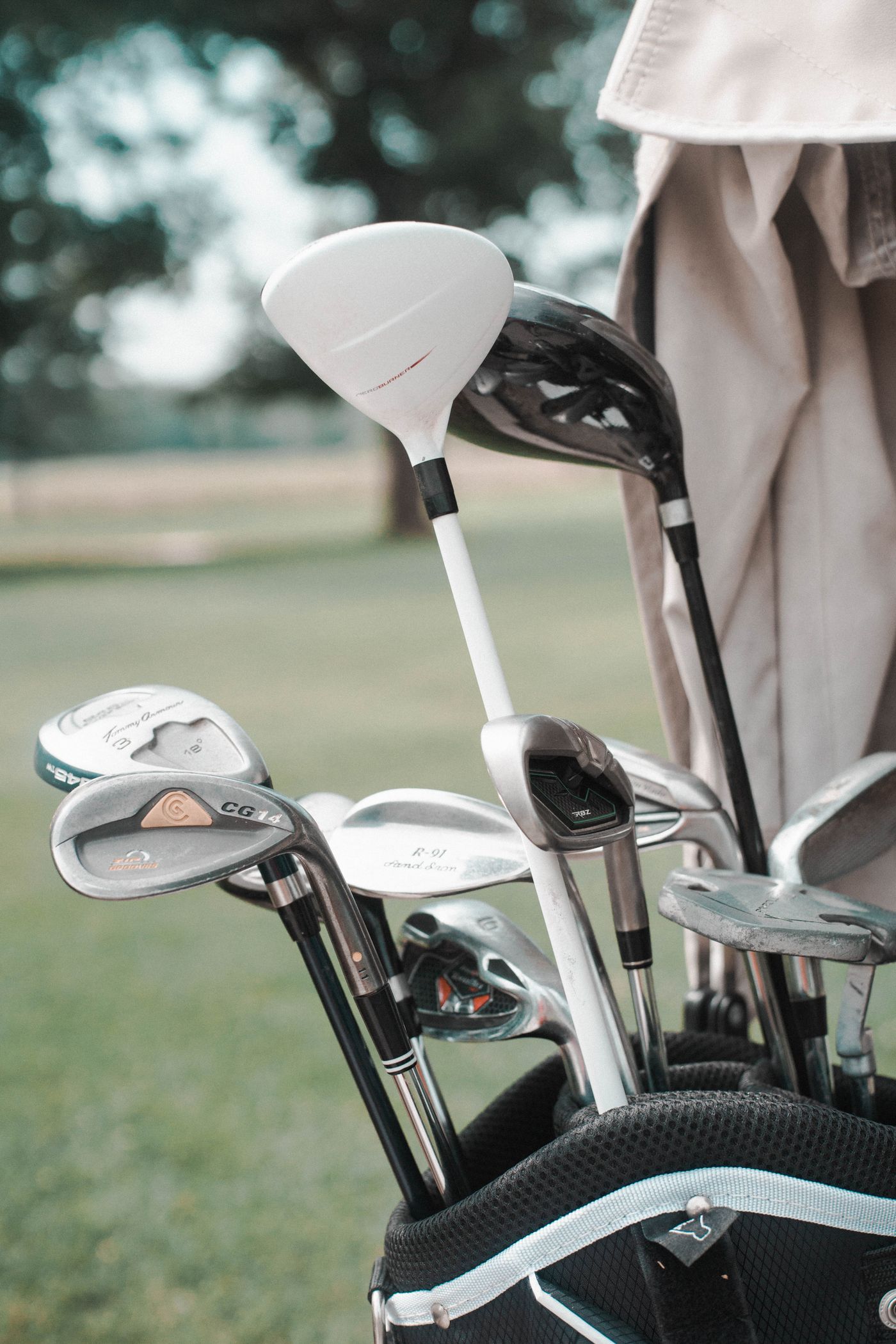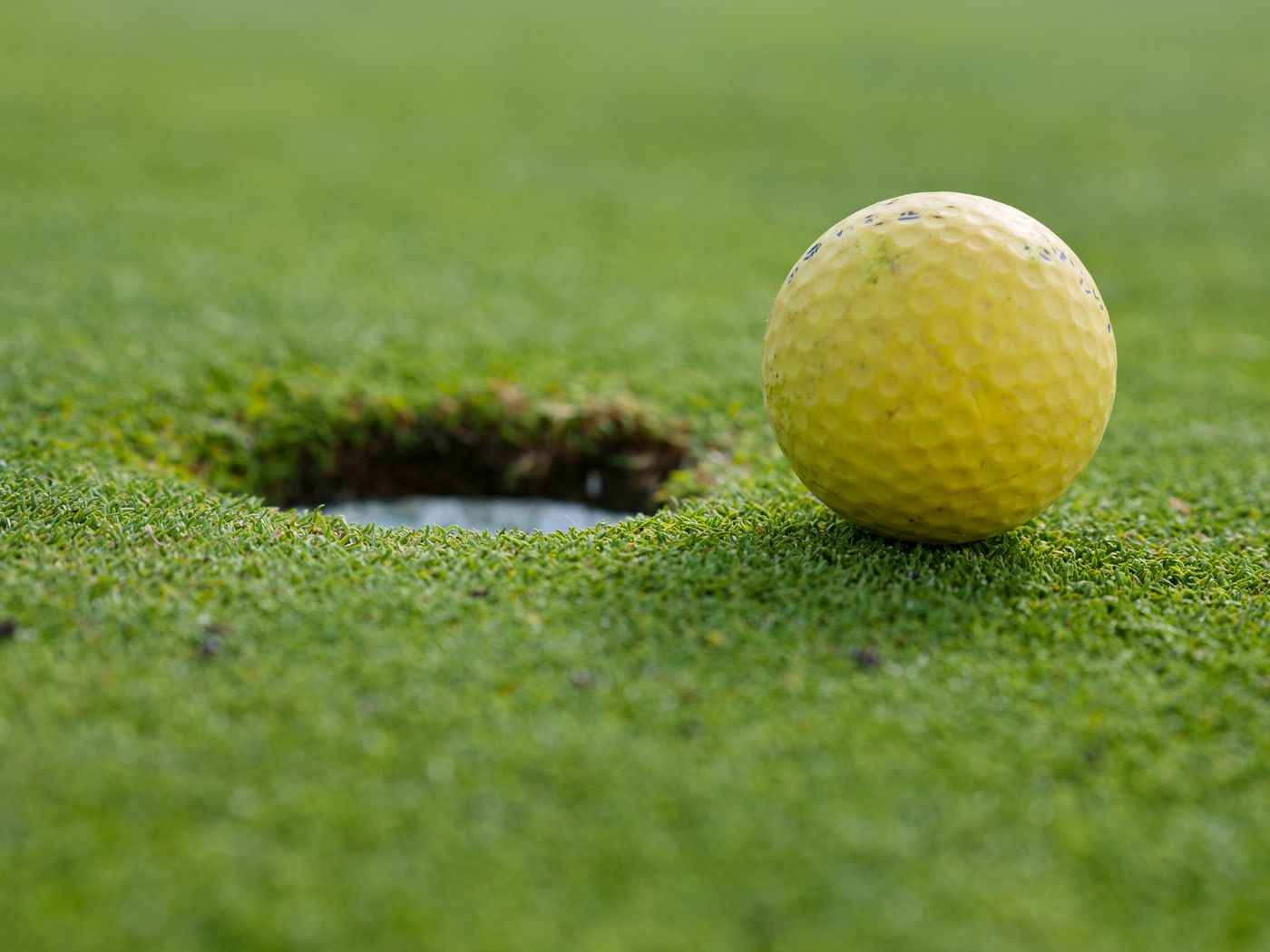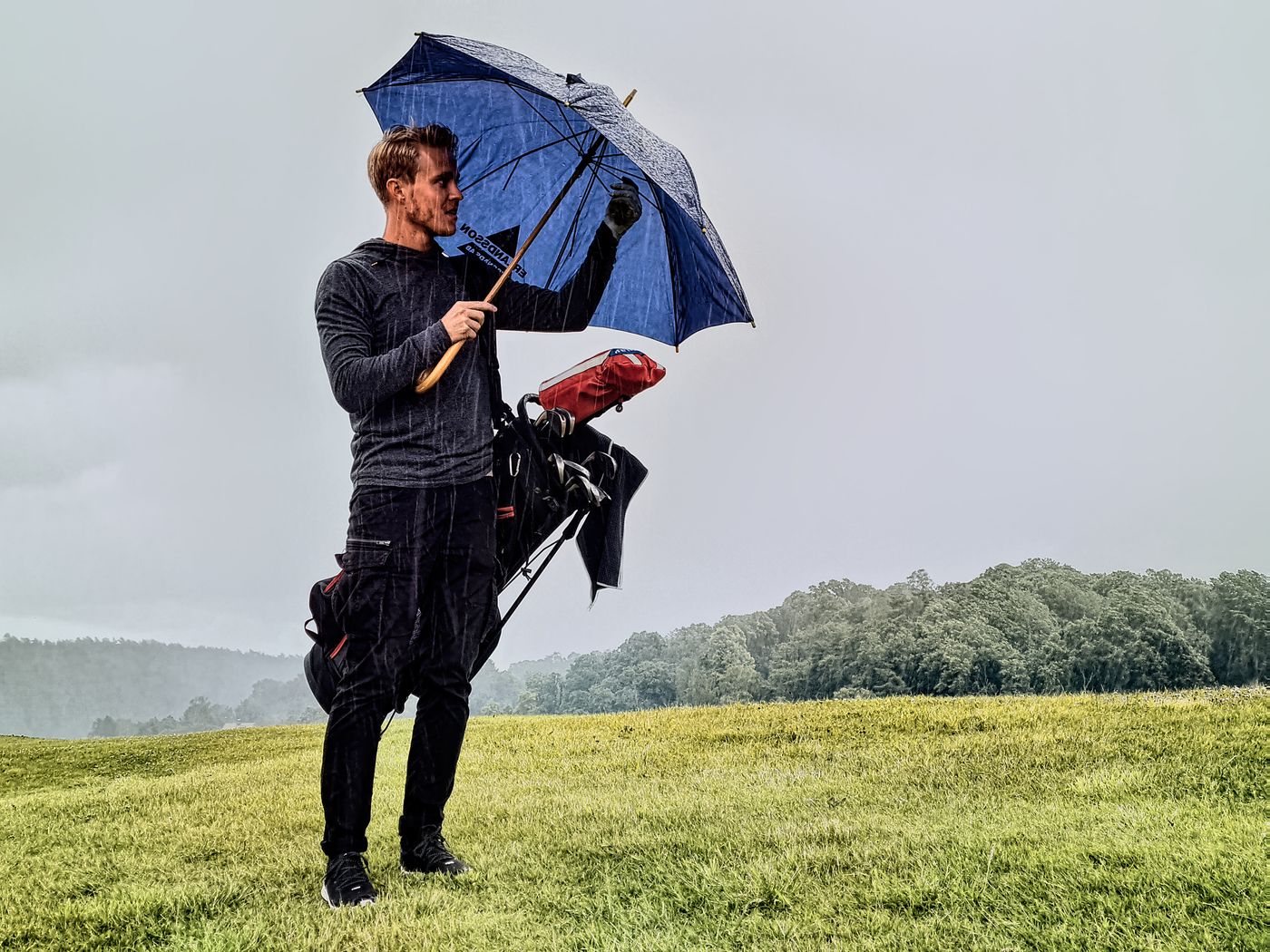
Fall golf comes down to two things: dressing in layers that still let you make a full turn, and adjusting your ball, grip and visibility once the leaves start dropping. We cover layering first, then the gear, including the one popular idea about fall golf that turns out to be mostly myth.
How to Layer for a Fall Round
The same mistake ruins fall rounds every year: golfers either overdress and cook by the back nine, or underdress and can’t make a full turn by the 6th hole.
Base Layer: Moisture-Wicking, Not Cotton. A polyester or poly-spandex base layer pulls sweat off your skin instead of holding it — cotton does the opposite, and a wet base layer is what actually makes you cold once the temperature drops, not the air itself.
Mid Layer: Packable, 4-Way Stretch. This is the layer that has to survive a full golf swing without restricting it. A quarter-zip built with real 4-way stretch fabric moves with your turn instead of fighting it, and packs down small enough to stuff in a pocket the moment the sun comes out.
Outer Layer: Only When You Need It. Save a shell or vest for genuinely cold or wet starts, and be willing to take it off by the middle holes. Overdressing costs you more swing restriction than the temperature drop costs you comfort.
Don't Forget Your Hands and Head. Cold hands lose feel faster than any other part of your game gets affected by weather — a pair of cart mitts between shots and a lined cap or beanie on the tee box matter more than people expect for keeping your touch around the greens.
Dress for the back nine, not the first tee — you warm up as you go, the day usually doesn't.
The Myth: “Cold-Weather Balls”
Cold air is denser than warm air, and a golf ball’s core genuinely loses some resiliency in the cold — Titleist’s own research puts the loss at roughly 1.5% of distance for every 20°F drop, or about 3 yards on a 200-yard shot between 50°F and 70°F. That part is real. What isn’t real: a distinct “cold-weather ball” category built to fix it. Titleist’s own guidance runs opposite to what most golfers assume — they recommend against switching balls for cold weather at all. Their reasoning: “if you change your golf ball, you change every shot in your bag” — the swing-to-swing consistency you lose by switching models costs more than the cold itself does. Their actual advice is simpler: store balls indoors at room temperature year-round, never in a cold trunk, and on a genuinely cold round, keep a second ball warming in your pocket and rotate it in every few holes.
What Actually Does Change This Time of Year
Two things about your ball are legitimately worth reconsidering for fall — just not the one everyone assumes.
Compression, for a different reason than “cold.” If bulkier layers are shortening your turn and costing you swing speed, that’s a real reason to consider a softer, lower-compression ball for the season — not because it’s cold out, but because a slower swing compresses a softer ball more completely. Our full breakdown of compression by swing speed has the picks.
Visibility, which is a genuinely engineered category. Fallen leaves and browning rough hide a white ball far more often than summer’s green backdrop does. Unlike “cold-weather balls,” high-visibility construction is real: matte finishes and saturated colors built specifically for tracking, not just tinted for style.
Volvik Vimat
$22.99A matte coating that cuts glare and makes the ball easier to track against brown and gold fall backgrounds. Available in yellow, orange, red, and green — pick whichever stands out most against your home course’s fall colors.
Check price →Titleist AVX Yellow
$50.00The same AVX construction and short-game spin Titleist’s better players already use, just in a high-visibility yellow shell instead of white — for golfers who don’t want to trade performance for visibility.
Check price →Grip and Hands: The Part That Actually Costs You Strokes
A wet grip does more damage to a swing than cold air ever will.
UA Drive Storm Gloves
$28.00Under Armour’s rain-specific tech on the back of the glove repels water without losing breathability — built for exactly the drizzly, damp fall rounds where a standard leather glove turns slick by the 6th hole.
HotHands Hand Warmers (10-Pair)
$8.97Drop one in each pocket before a cold-morning round — warm hands hold onto feel and grip pressure a lot longer than you’d expect.
Check price →One More Thing Worth Owning: A Real Umbrella
Titleist Players Double Canopy Umbrella
$49.99A double-canopy, vented design lets wind pass through instead of turning the umbrella inside out — the exact failure mode of a cheap single-canopy umbrella on a gusty fall day. Marked down from $59.99.
Fall doesn’t call for different gear so much as it calls for gear that’s honest about what actually changes — your grip, your visibility, how long you stay comfortable — not the ball’s imaginary “temperature rating.”
Should I really not buy a special cold-weather ball?
Titleist’s own advice is to keep playing the ball you already trust and manage its temperature instead — store it at room temperature and rotate a warm one into play. Switching models for the cold does more harm, from unfamiliarity, than the cold itself does.
Do high-visibility balls perform differently than white ones?
Not from the manufacturers featured here — Volvik and Titleist build their colored balls on the same cores and covers as their white versions. The coating changes visibility, not performance.
We may earn a commission if you purchase through our links — at no extra cost to you.